Education
Teaching Philosophy
Considering my time as a teaching assistant at the University of Georgia, some of my favorite memories include mentoring fashion design students in small groups or one-on-one in between classes or on the weekends. In the spring of 2025, I had the opportunity to work as Instructor of Record for my teaching assistantship, teaching Apparel Studio Design. That semester, I became acquainted with many of the design emphasis students as they were preparing their portfolios and resumes to enter the job market. While our program included a seminar course to help graduating students going into the fashion industry, there were no courses that focused on fashion portfolio development. I used my office hours and available weekend hours to meet with some of the juniors and graduating seniors to advise them on how to arrange the coursework in my design class into a digital portfolio to submit for internships. Additionally, for students who were not able to take my course, and needed specific help building particular skills, I set aside time to meet individually or via Zoom for illustration tutorials. I thoroughly enjoyed my time mentoring students outside of class, as it gave me the opportunity to tailor my instruction to fit the needs of each student individually, while fulfilling my passion and purpose working in education. That passion and purpose is also my philosophy, to use my knowledge and experience as a working fashion artist in not only fashion, but also costume and material culture, to support the passion and purpose of the next generation of fashion makers.
Core Beliefs & Teaching Methods
My core beliefs in fashion education are student-centered, focusing on fostering the discovery of what ignites their passion and purpose in the fashion field, and increasing their knowledge through active learning. As an educator, my learning objectives across design, history, and research are to provide students with skill building practices to continuously grow their technical experience and critical thinking as they continue into higher learning and the industry. With my core beliefs as my guiding light, my approach to teaching is through experiential learning and praxis, while introducing students to real life examples of how to use coursework in the field. This is exemplified through a core assignment each student had to complete in my Apparel Studio Design class. This assignment was to keep a weekly fashion journal, responding to creative prompts to encourage hand illustration practice, creative problem solving by creating technical sketches of garments, and practice creating mood boards. Beyond higher education, working artists must continue to work their creative hand and thinking to keep up in the ever changing world of fashion and dress. By keeping a fashion journal, students learn how to practice hand and creative thinking, and will build a personal portfolio of ideas and inspirations for future work.
In addition to assignments like a semester fashion journal in a design course, while guest lecturing as a teaching assistant in History of Dress, I create opportunities for students to engage with the week’s readings and topics in pairs or groups. One of my favorite history lectures focuses on the Battle of Versailles, an event in the industry that shifted global fashion in the 1970s. My lecture style is a split structure with the first half of class being a visual presentation of images and short video clips, while the second half of the class is reserved for student group work to use the new knowledge creatively. For my lecture on the Battle of Versaille, I provide an introduction to the historical event by highlighting the key people, locations, and facts, accompanied with images and videos of the fashion show in the Palace of Versaille. After the students learn about the history and its impact on global fashion, they are challenged to travel back in time and join the runway show line-up. In small groups, they use previous weekly readings about 1960s and 1970s fashion to create their runway show slide within my presentation. Based on their new knowledge of the time period and the Battle of Versailles, they must choose a design concept, colors, fabrics, and choose the movement and music their models would use to wow show guests. By the end of class, students expand their knowledge of fashion history by engaging in an activity to help them remember how American designers of the 1970s helped shift the view of fashion beyond the couture houses of France, to American ready-to-wear.
Inclusive & Innovative in the Classroom
Using the readings selected for lecture and design courses and activity prompts for in-class and project assignments, I practice inclusivity and innovation in the classroom. While my Apparel Studio Design course was a design lab, I included a set of options of readings centering fashion for “othered” bodies. These reading options provided the opportunity for students to use their own design inspirations and style, while considering “othered” and diverse bodies including differently abled and bodies larger or smaller than the global industry standards. Students were allowed to choose from a small selection of readings that center “othered” bodies and critically consider contemporary fashion design and garment structure techniques. A short written assignment and fashion journal prompt were then provided to further engage with the content. In small groups, the class then presented their journal design work inspired by the readings and their written assignment. This type of coursework supports inclusivity in the fashion market and encourages students to use innovative ideas to create new design concepts. As an educator, my hope is that these engaging activities in diversity and inclusivity will become common practices throughout the careers of the next generation of designers.
I utilize technology as a part of my pedagogical tools to engage students, during my visual slide presentations in class, both in-person and remote. I use visual slide presentations for my lectures with engaging activity prompts for students to interact with my presentation, using their devices to create slides, answer questions, and present creative work pertaining to the topics. My slide presentations are always uploaded on the university’s eLearning Commons (eLC) before class for easy access and continued use throughout the semester. Additionally, I use QR codes for those using phones or tables to access information. Including my students' work, comments, and creative ideas in my presentations helps them to feel a part of the knowledge-making process and that their ideas are of value to the coursework.
As an Instructor of Record, I used two forms assessment methods to know how my students were learning. First, just after their mid-term test, provided available appointments for one-on-one meetings to discuss their individual work in class and possible design direction for their final projects. This meeting allowed for students to voice any questions or concerns with the coursework and early preparation on the final design project. Additionally, in the final weeks of the semester I gave each student a note card and about ten minutes of reflection time with soft music to reflect on their time in the class and my teaching of the course material. Students submitted their comments and suggested directly to me for my teaching style and the coursework. Finally, I forwarded the university’s course evaluation for comments that would be submitted to the department as well. These assessments proved evidence of my success as an effective instructor as all the student feedback on the notecards and department evaluations were positive. Overall, students were excited about the skill set in hand illustration, sewing, and draping, which was exemplified in their learning outcomes through exams and project presentations.
I look forward to continuing my work as an educator in fashion design, history, and research to grow professionally in academia. As I reflect on my time as an instructor, teaching assistant, and mentor, I plan to continue to develop my readings selection, visual presentations, and engaging activities to improve as an educator. By updated reading selections annually, creating more interactive presentations and activities aligned with my university’s mission, I will continue to make an impact of the next generation of designers, while contributing to my department’s goals.
Research Statement
Introduction
Some of my earliest memories that have fueled my love for learning and creating began as a child, tagging along with my mother to arts and culture events in our community, as well as quietly watching her sew for hours. By my final years in high school, I found my passion in the theater department, researching historical dress to create costumes for our seasonal shows. These early beginnings led me on a path to work in both fashion and costume design and research in women’s period costume from the 19th to the 20th centuries, and Black communities across the globe.
Much of my current research centers Black American communities, responding to gaps in research. In particular, I focus on the contributions of Black culture to global fashion and dress, and small underrepresented archives. The goal of this research includes:
Studying phenomena of fashion and dress in Black American communities
Preserving, collecting, and exhibiting the histories through textiles
And using qualitative and Endarkened Epistemologies to amplify the voices of women, while healing and transforming the Black community
This research impacts the Black community, as well as supports the growing education and scholarship of historical and cultural dress, while growing large and small archives for the future. While much of my research centers Black communities, my additional areas of research include qualitative research and museum studies to support my work in historical and cultural dress. My scholarship in qualitative research has helped to create a foundation of theoretical frameworks, while my work in museum studies provides a space for collecting, preserving, and exhibiting praxis in university and community settings. My continued work contributes to the scholarship of dress and textiles across multiple fields including fashion and costume, qualitative research, and institutional and community archives.
Research
My current research focuses on community-institutional archives through a case study, creating a debutante collection at the Lucy C. Laney Museum of Black History, a small museum in Augusta, Georgia. This research began in the fall of 2023, in preparation to curate and mount, Live Lovely for Excellence: The Rosa T. Beard Debutante Club, an exhibition, highlighting the history and service of local Black communities debutantes of Augusta. The participatory archiving framework was used as a theoretical framework and methodology to build a community-institutional collection for the Black debutante community and the museum. The Roadmap for Participatory Archiving, as cited by the University of Massachusetts Boston, was used as a method to plan the collection, documentation, and exhibition of the histories of former debutantes. The collection and exhibition (now mounted annually, every spring) include oral histories, photos, documents, and objects of dress. This approach to collections work was unique, as participatory archiving is not practiced in dress and textiles, due to the sensitivity of the objects (storing and conservation). This research has not only resulted in a new collection and an annual exhibition, but also conference presentations, and a forthcoming publication in the Dress journal, published by the Costume Society of America. Additionally, this work contributes to the scholarship of dress in underrepresented communities, preserves the histories of previously undocumented histories, and the 2025 Georgia Association of Museums award for exhibition of the year (category two).
My work building and exhibiting the Black debutante community-institutional collection has inspired my current dissertation research in cotillion dress. My dissertation topic explores the meaning-making and performance of dress among debutante cotillions in Black American communities in the low country, mid-20th to the early 21st centuries. My proposed research uses the Apparel-Body Construct, created by Marilyn DeLong as a model in which the Politics of Respectability and Racial Uplift philosophy is set to understand how the debutantes form meaning of cotillion dress. This work is guided by Cynthia Dillard’s Endarkened Epistemologies, centering the voices and experiences of Black women, to guide qualitative research with former debutantes as co-researchers. Additionally, sensory ethnography and arts-based research using textiles will be used to create depth of scholarship, build a safe space and community between myself (as researcher) with my co-researchers, and foster healing and transformation in the Black community. This research addresses gaps in debutante scholarship, focusing on dress, while building Black archives.
Future Plan
My future research agenda includes continued work in dress and textiles within underrepresented American communities, contributing to fashion, museums, and qualitative research. To fulfil these short-term and long-term research goals, I plan to continue research in sub-cultural dress (historically and culturally), grow my working relationships with educational and community museums and archives, and build experience in qualitative and Endarkened work. This research not only includes research for publications and building collections and exhibitions, but to also produce art-based work through fashion illustration and films, using Saidiya Hartman’s critical fabulation. My long-term goals include creating and contributing to state and national debutante collections and exhibitions and creating foundational university coursework, studying fashion and dress in Black history and culture, community-institutional archiving in museum studies programs, and Endarkened fashion-work in qualitative research.
Conclusion
My research in dress and archival work aligns with the Auburn University’s Fashion Department as there is a focus on textiles collections, management, and exhibitions and teaching fashion history and textiles courses to support undergraduate and graduate students in research and praxis. My research both complements and bridges gaps in your department by contributing to dress in underrepresented communities. I believe that my work, past, present, and future will help grow and diversify the work your university is committed to in the community, state, and across the nation.
Current Scholarship

The American Debutante in Black Culture:
A Qualitative Study of Dress & Meaning-Making
Purpose Statement
This research seeks to understand and document the experience of the American debutante and how these experiences influence image-making, in Black communities. The purpose of this work is to document this image-making process through dress (fashion, hair, and beauty) and all the ephemeral objects that American debutantes interact with. The data collected and analyzed in the study will contribute to the overall historical, image-making, and material culture documentation of the American debutante across diverse communities and cultures. This research will critique the practices of debutante groups and the impact (positive or negative) that it has on the youth and community involved. The findings will directly impact historically Black debutante groups that have existed for decades, building archives for them directly and in community institutions, as well as better inform new groups being formed in the 21st century.
There are multiple gaps in the study of the American debutante's experience through dress and how it impacts her image-making process, as well as the objects of dress involved. This historical and cultural documentation is necessary to build the foundation for collecting, archiving, and exhibiting debutante history and culture in both local and national institutions (Featherstone, 2000). In the area of archiving and collecting, this information will put into focus what debutante objects and ephemera should be collected from communities to document and share historically and culturally accurate stories to educate those with little to no knowledge of the subject (Matassa, 2011).
In the empirical and conceptual literature on this topic, several published works address dress and the body. These publications focus on the overall experience and historical and cultural background through qualitative interviews and ethnographic research but do not include an in-depth study of dress. The work of Escalas (1993), Harrison (1997), and Cole (2010) set a standard for a semi-structured feminist interviewing style to continue research on the former and current debutantes in Black communities. This research will address the gaps in the literature that provide information about culturally diverse or non-white debutantes and contribute to the phenomenological study of dress and the body of young women (and men) involved and how they used these social groups to uplift themselves and their communities (Lynch, 1999; Ballard, 2020).
This research is important as it contributes to areas of gender and women’s studies, cultural phenomena, and studies of class and societal norms. The findings will better inform the researcher and the reader about fashion objects used to create meaning in the performance of the debutante dress.
Reflexivity
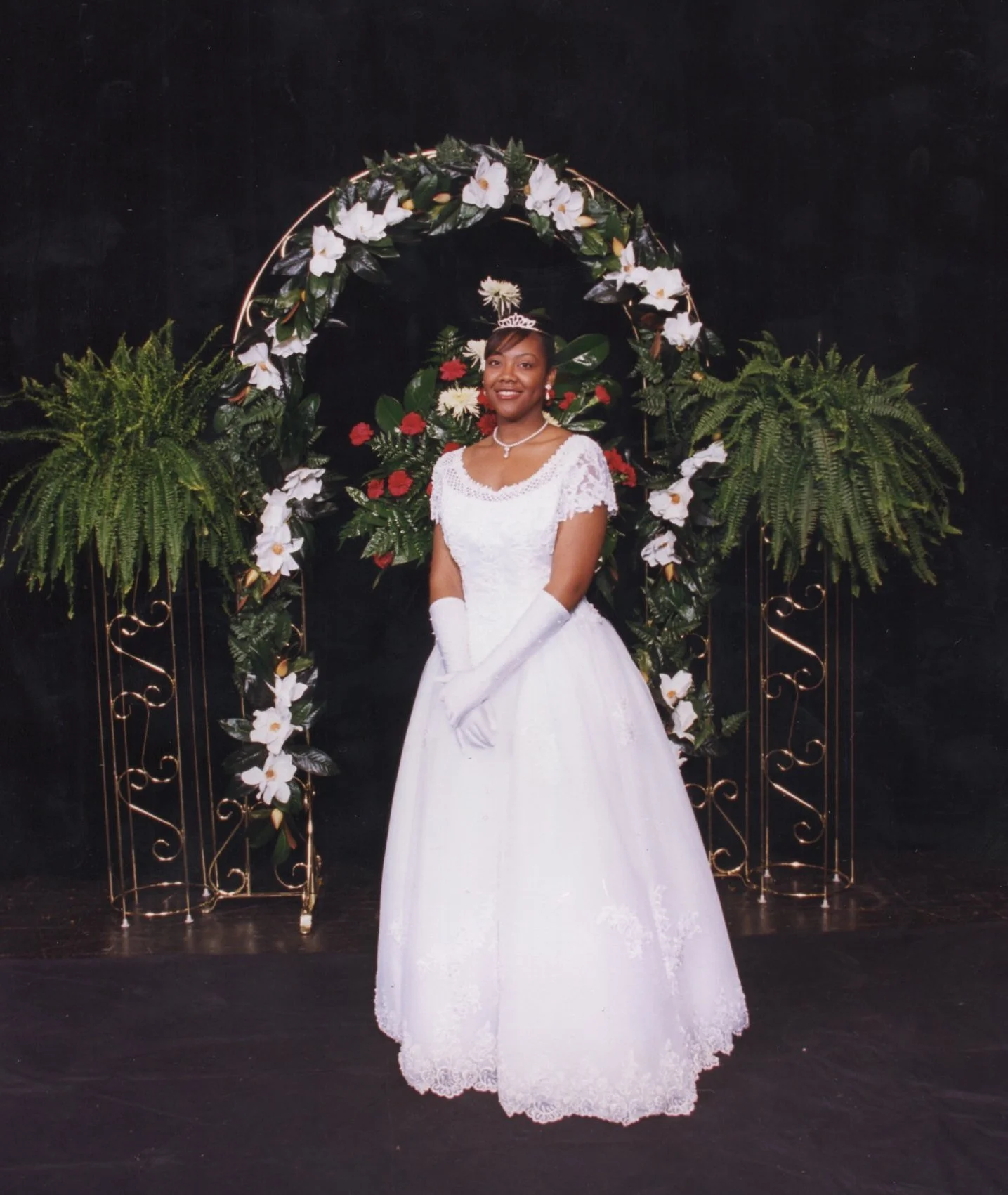
I come to this research as a member of the community, as former debutante and cotillion dress designer. I share many of the same experiences and identities as the current and former debutantes I have interacted with in my research. Although I am from a small community where I was part of a historically Black debutante organization, my time away has helped to distance me from the same worldviews as the majority of my participants, while my personal memories and professional and academic experience guide some of the research pathways. Recent practice in qualitative research helps to distance myself from the participants enough to probe and uncover details about the experience and objects involved. The unique perspective I bring to this study includes my personal past experience as a debutante (and memories of etiquette training in dress), my undergraduate scholarship in fashion studies and design, my graduate scholarship in charm schools, and my professional experience in fashion and cultural studies. This unique combination informs my research by providing a foundation to discuss dress and parts of dress from a technical and cultural perspective through the lens of the Black diaspora, and gender.
Description of Theoretical Perspective
The broad paradigm that supports this research design is phenomenology, focusing on the body and objects.
The theoretical perspective of phenomenology, following Marilyn DeLong’s (1998) apparel-body construct theory and framework, supports this study and research design. Components of DeLong’s (1998) theoretical framework consist of form (the clothed body), the viewer (the body), and context.
Phenomenology and the apparel-body construct theory assume that it is the first-hand personal experience that creates meaning and informs a qualitative understanding of cultural phenomena (Woodruff, 2018).
These assumptions will be translated into the research strategy and methodology by focusing on recorded and transcribed individual interviews, providing a first-hand account of their experience with dress.

Methodological Statement
The research design that best supports the purpose statement and research questions includes
1) Literature Review: Review of literary sources that include historical and cultural information about dress and existing published qualitative research about American debutante organizations.
2) Historical Background Research: Compile a list of historically Black debutante organizations in three major cities in Georgia and conduct historical research on each.
3) Interviews: Conduct semi-structured qualitative interviews with each selected group. These interviews would include current and former debutantes, as well as advisors and any images the participants would like to share.
4) Analysis: using the existing literature, historical background, and interviews to understand the experiences of dress, material culture objects involved, and see the changes in dress and the body over time within each organization.
This approach and use of existing literature and historical background will set the foundation for collecting and analyzing new data. The semi-structured interviews will allow for flexibility and new questions to probe deeper for more information (Ruslin, et. al., 2022). This methodology supports the relationship the researcher is seeking by establishing trust and a partnership with the participants to their oral histories and material culture objects to add to and or create historical and cultural collections for their individual organizations, local institutions, and national archives.

Community Sewing & Preservation Workshops
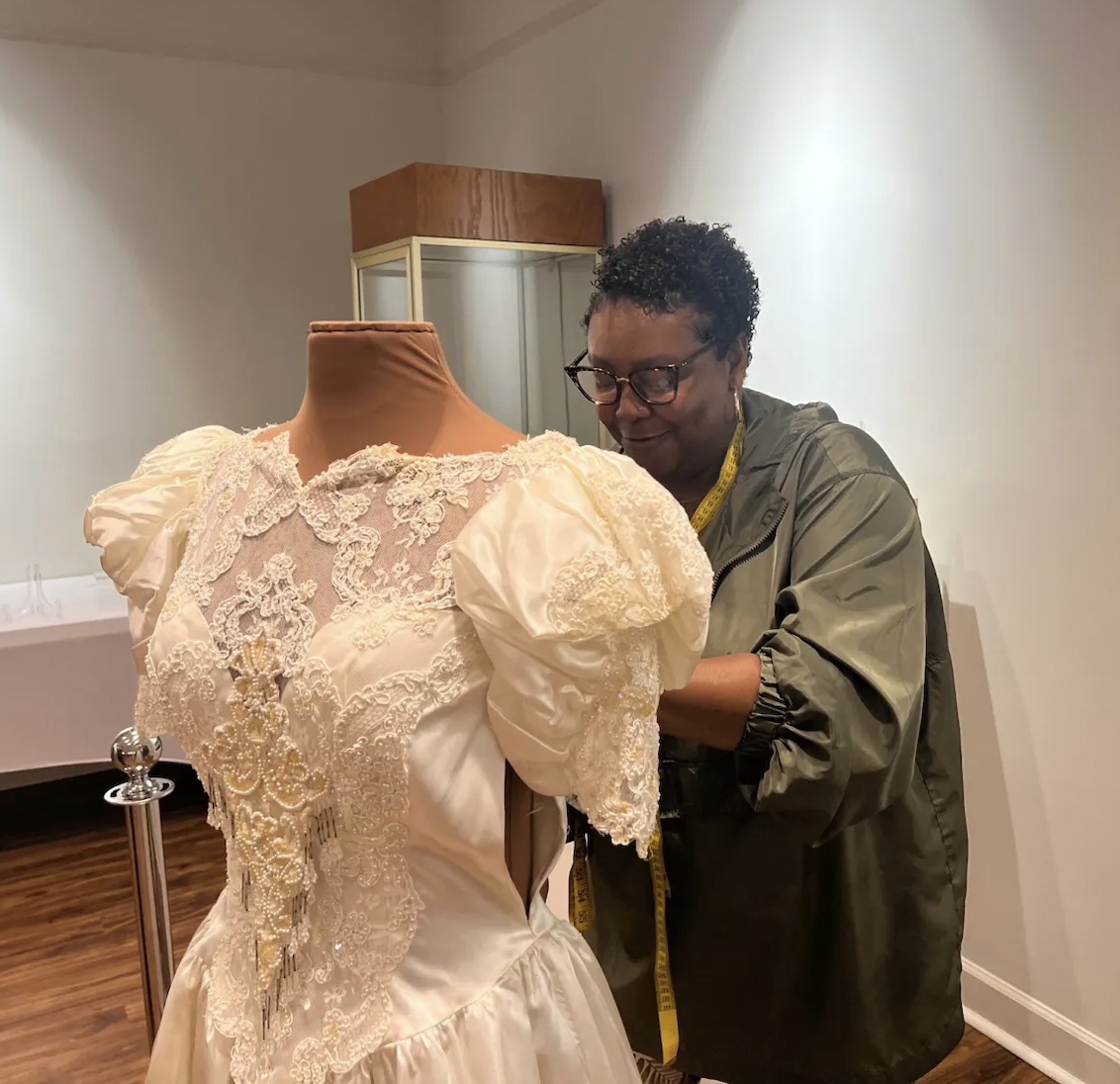
Spring 2025 Preserving Precious Memories
Join the Georgia Heritage Room and the Lucy Craft Laney Museum of Black History for a special preservation workshop!

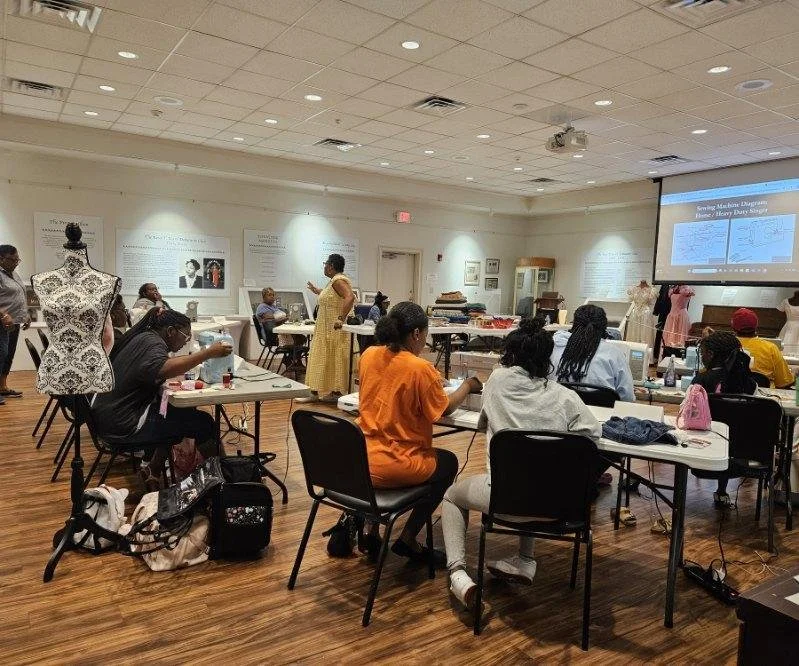
Annual Summer Sewing Programming
Learn basic hand sewing and home sewing machine skills this summer at Lucy C. Laney Museum of Black History in Augusta, GA!